
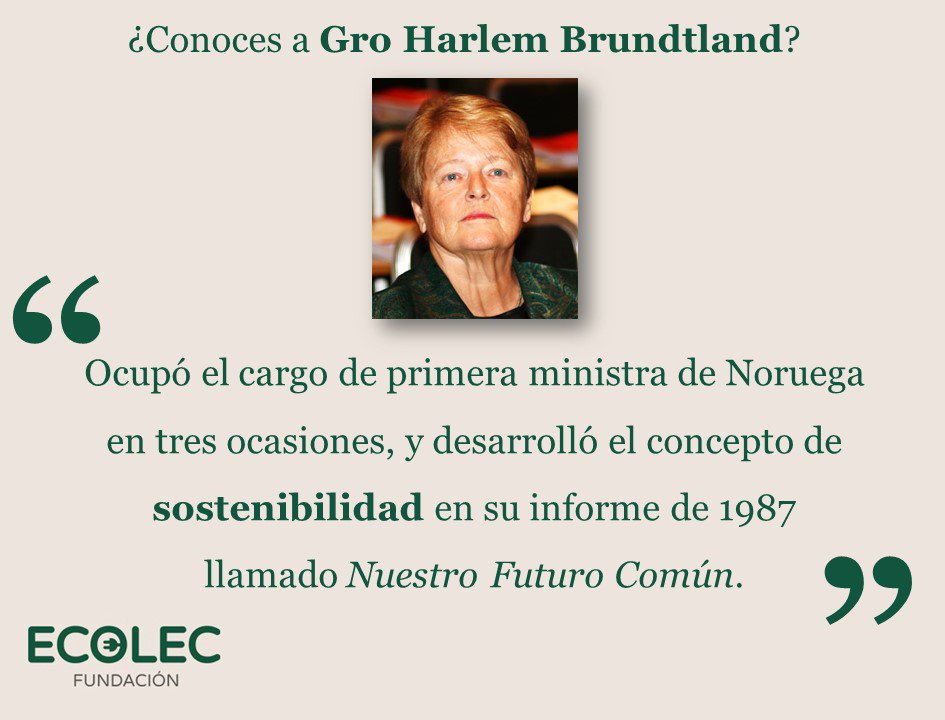
The Brundtland Report of 1987: Pioneering Sustainable Development
In 1987, the world was presented with a groundbreaking report that would shape the global conversation on sustainable development for years to come. The report, officially titled “Our Common Future” but more commonly known as the Brundtland Report after its chairperson Gro Harlem Brundtland, was commissioned by the United Nations and sought to address the pressing environmental and developmental challenges facing humanity.
The Brundtland Report defined sustainable development as “development that meets the needs of the present without compromising the ability of future generations to meet their own needs.” This concept marked a significant shift in thinking, emphasising the interconnectedness of environmental protection, economic growth, and social equity.
One of the key contributions of the report was highlighting the importance of long-term planning and decision-making that takes into account environmental impacts. It stressed that economic development must be pursued in a way that does not deplete natural resources or harm ecosystems, recognising that unchecked growth can lead to irreversible damage to our planet.
Moreover, the Brundtland Report underscored the need for international cooperation and collective action to address global challenges. It called for governments, businesses, and individuals to work together towards sustainable solutions that benefit all people, regardless of their location or socioeconomic status.
Over three decades since its publication, the principles outlined in the Brundtland Report continue to guide discussions on sustainability and inform policies aimed at creating a more resilient and equitable world. Its legacy serves as a reminder of our shared responsibility to safeguard our planet for current and future generations.
Understanding the Brundtland Report of 1987: Key Questions and Insights
- What was the Brundtland Report of 1987?
- How do you cite the 1987 Brundtland Report?
- Who was the Brundtland Commission introduced by in 1987?
- What was identified by the Brundtland Report in 1987?
- What is the Brundtland definition of 1987?
- What is the SDG 1987?
- What are the three pillars of the Brundtland Report?
What was the Brundtland Report of 1987?
The Brundtland Report of 1987, also known as “Our Common Future,” was a landmark document commissioned by the United Nations that defined and popularised the concept of sustainable development. Chaired by Gro Harlem Brundtland, the report emphasised the importance of balancing economic growth, social equity, and environmental protection to meet the needs of both present and future generations. It highlighted the interconnectedness of these elements and called for global cooperation to address pressing environmental and developmental challenges. The Brundtland Report remains a seminal work in sustainability discourse, advocating for responsible decision-making that considers the long-term impacts on our planet and societies.
How do you cite the 1987 Brundtland Report?
When citing the 1987 Brundtland Report in academic or professional writing, it is important to follow the appropriate citation style guidelines. Typically, you would reference the report as follows: Author(s) (Year). Title of the Report: Our Common Future. Publisher. For example, a citation in Harvard referencing style would look like this: World Commission on Environment and Development (1987). Our Common Future. Oxford University Press. It is advisable to consult the specific citation style guide required by your institution or publication to ensure accuracy and consistency in citing the Brundtland Report.
Who was the Brundtland Commission introduced by in 1987?
The Brundtland Commission, officially known as the World Commission on Environment and Development (WCED), was introduced in 1987 under the leadership of Gro Harlem Brundtland. Gro Harlem Brundtland, a former Prime Minister of Norway and prominent advocate for sustainable development, chaired the commission and played a pivotal role in shaping the influential report titled “Our Common Future.” This report, commonly referred to as the Brundtland Report, laid the foundation for the modern understanding of sustainable development by emphasising the importance of balancing economic growth with environmental protection and social equity.
What was identified by the Brundtland Report in 1987?
The Brundtland Report of 1987 identified the concept of sustainable development as a crucial pathway towards addressing the environmental and developmental challenges facing humanity. It emphasised the importance of meeting present needs without compromising the ability of future generations to meet their own needs. The report highlighted the interconnectedness of environmental protection, economic growth, and social equity, calling for long-term planning and decision-making that considers environmental impacts. Additionally, it underscored the necessity for international cooperation and collective action to tackle global issues and promote sustainable solutions that benefit all individuals worldwide.
What is the Brundtland definition of 1987?
The Brundtland definition of 1987, as outlined in the seminal report “Our Common Future,” refers to the concept of sustainable development. Coined by Gro Harlem Brundtland, the chairperson of the report, sustainable development is defined as development that meets the needs of the present without compromising the ability of future generations to meet their own needs. This definition emphasises the importance of balancing economic growth, social equity, and environmental protection to ensure a harmonious coexistence between human activities and the natural world. The Brundtland definition has since become a cornerstone in discussions on sustainability, guiding efforts to create a more prosperous and resilient future for all.
What is the SDG 1987?
The frequently asked question regarding Brundtland 1987 often pertains to the misconception of SDG 1987. It is important to clarify that the Sustainable Development Goals (SDGs) were not established in 1987 but rather in 2015 by the United Nations as a set of global objectives to achieve a more sustainable and equitable future by 2030. The Brundtland Report of 1987 laid the foundation for the concept of sustainable development, influencing subsequent initiatives such as the SDGs. While not directly related to an SDG specifically from 1987, the principles outlined in the Brundtland Report continue to shape modern sustainability efforts and guide international development agendas towards a more sustainable world.
What are the three pillars of the Brundtland Report?
The Brundtland Report of 1987 introduced the concept of sustainable development, which is built upon three interconnected pillars: economic development, social equity, and environmental protection. These pillars represent the fundamental principles that guide sustainable decision-making, emphasising the need to balance economic growth with social well-being and environmental stewardship. By addressing these three dimensions holistically, the Brundtland Report advocates for a harmonious approach to development that ensures the needs of both present and future generations are met without compromising the health of our planet.