
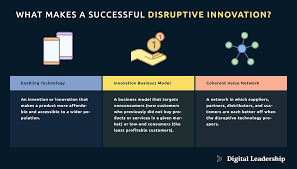
Examples of Disruptive Innovation That Changed Industries
Disruptive innovation refers to the process by which a new product or service enters the market and disrupts existing industries, often leading to significant changes in consumer behaviour and market dynamics. Here are some notable examples of disruptive innovation that have reshaped various industries:
Uber
Uber revolutionised the transportation industry by introducing a convenient and affordable alternative to traditional taxis. Its ride-hailing app disrupted the way people book and use transportation services, leading to increased competition and changes in regulations worldwide.
Airbnb
Airbnb disrupted the hospitality industry by allowing individuals to rent out their properties as accommodation options for travellers. This peer-to-peer lodging platform challenged traditional hotel chains and provided unique, local experiences for guests.
Netflix
Netflix transformed the entertainment industry by offering online streaming services that allowed viewers to access a wide range of movies and TV shows on-demand. This disrupted the traditional cable TV model and led to a shift towards digital content consumption.
Tesla
Tesla disrupted the automotive industry by popularising electric vehicles with cutting-edge technology and sustainable practices. Its innovative approach to car manufacturing has pushed traditional automakers to invest more in electric vehicle development.
Amazon
Amazon’s e-commerce platform revolutionised retail by offering a vast selection of products online with fast delivery options. Its customer-centric approach and efficient logistics have set new standards for shopping experiences, forcing brick-and-mortar stores to adapt or compete.
These examples showcase how disruptive innovation can create new opportunities, challenge established norms, and drive positive change in various sectors. Embracing innovation is essential for businesses looking to stay competitive and meet evolving consumer demands in today’s dynamic market landscape.
Exploring Disruptive Innovation: 9 Transformative Examples Across Industries
- Look for examples where new technologies or business models have transformed industries.
- Consider how companies like Uber and Airbnb disrupted the transportation and hospitality sectors.
- Examine how Netflix revolutionised the entertainment industry with its streaming service.
- Study how Amazon disrupted traditional retail through e-commerce and cloud computing services.
- Explore how Tesla disrupted the automotive industry with its electric vehicles.
- Analyze how Spotify changed the music industry by offering streaming services.
- Learn about how Airbnb transformed the accommodation sector by connecting travellers with hosts directly.
- Investigate how mobile payment systems like Apple Pay have disrupted traditional banking and finance services.
- Understand how disruptive innovations often start small but can quickly gain momentum and reshape entire industries.
Look for examples where new technologies or business models have transformed industries.
When exploring disruptive innovation examples, it is crucial to seek instances where new technologies or business models have fundamentally transformed industries. By examining these cases, we can understand how innovative solutions have reshaped traditional practices and paved the way for groundbreaking changes. Whether it’s the introduction of a game-changing technology like electric vehicles or the implementation of a disruptive business model in sectors such as transportation or hospitality, these examples demonstrate the power of innovation to revolutionise markets and create new opportunities for growth and development.
Consider how companies like Uber and Airbnb disrupted the transportation and hospitality sectors.
Consider how companies like Uber and Airbnb disrupted the transportation and hospitality sectors by introducing innovative business models that transformed traditional industries. Uber’s ride-hailing platform revolutionised the way people commute, offering a convenient alternative to traditional taxis. Similarly, Airbnb disrupted the hospitality sector by enabling individuals to rent out their properties to travellers, challenging the dominance of traditional hotels. These examples highlight the power of disruptive innovation in reshaping consumer behaviour and creating new opportunities for businesses to thrive in an ever-changing market landscape.
Examine how Netflix revolutionised the entertainment industry with its streaming service.
Netflix revolutionised the entertainment industry with its streaming service by fundamentally changing how people consume movies and TV shows. By offering a vast library of content that users can access anytime, anywhere, Netflix disrupted the traditional model of scheduled programming and DVD rentals. The convenience and variety provided by its online platform not only altered viewing habits but also influenced content creation and distribution strategies across the industry. Netflix’s success in leveraging technology to deliver personalised entertainment experiences has set a benchmark for innovation in the digital streaming landscape.
Study how Amazon disrupted traditional retail through e-commerce and cloud computing services.
By studying how Amazon disrupted traditional retail through e-commerce and cloud computing services, we gain valuable insights into the power of disruptive innovation. Amazon’s innovative approach to online shopping not only transformed the retail industry by offering a vast selection of products with efficient delivery options but also set new standards for customer experience. Additionally, Amazon’s cloud computing services through Amazon Web Services (AWS) revolutionised the technology sector by providing scalable and cost-effective solutions for businesses worldwide. This example highlights how embracing disruptive technologies can lead to significant market impact and reshape industry landscapes.
Explore how Tesla disrupted the automotive industry with its electric vehicles.
Tesla disrupted the automotive industry by introducing electric vehicles that combined cutting-edge technology with sustainable practices. By popularising electric cars and pushing the boundaries of innovation, Tesla challenged traditional automakers to rethink their approach to vehicle design and manufacturing. The company’s dedication to creating high-performance electric vehicles with long-range capabilities has not only changed consumer perceptions about electric cars but has also accelerated the shift towards sustainable transportation solutions. Tesla’s impact on the automotive industry serves as a prime example of how disruptive innovation can drive positive change and redefine entire sectors.
Analyze how Spotify changed the music industry by offering streaming services.
Spotify transformed the music industry by introducing a disruptive innovation in the form of streaming services. By allowing users to access a vast library of songs and albums on-demand, Spotify revolutionised how people consume music. This shift from physical CDs and digital downloads to streaming not only provided listeners with convenience and variety but also challenged traditional revenue models in the music business. Spotify’s success highlighted the importance of adapting to changing technology trends and consumer preferences, setting a new standard for the industry and inspiring other music platforms to follow suit.
Learn about how Airbnb transformed the accommodation sector by connecting travellers with hosts directly.
Airbnb transformed the accommodation sector by pioneering a platform that connects travellers directly with hosts, offering a unique and personalised lodging experience. By enabling individuals to rent out their properties to guests, Airbnb disrupted the traditional hospitality industry, providing a more authentic and affordable alternative to standard hotels. This innovative approach not only empowered hosts to monetise their spaces but also allowed travellers to explore new destinations while immersing themselves in local communities. Airbnb’s disruptive model has reshaped the way people perceive and access accommodation options, highlighting the power of technology in revolutionising the travel sector.
Investigate how mobile payment systems like Apple Pay have disrupted traditional banking and finance services.
Mobile payment systems like Apple Pay have significantly disrupted traditional banking and finance services by offering users a convenient and secure way to make transactions using their smartphones. This innovation has revolutionised the way people manage their finances, reducing the reliance on physical bank branches and traditional payment methods. With features such as biometric authentication and real-time transaction tracking, mobile payment systems have enhanced the overall user experience and prompted banks to adapt to changing consumer preferences in the digital age. The rise of mobile payment systems highlights the importance of embracing technological advancements to stay relevant in an increasingly digitalised financial landscape.
Understand how disruptive innovations often start small but can quickly gain momentum and reshape entire industries.
Understanding how disruptive innovations often start small but can quickly gain momentum and reshape entire industries is crucial in today’s fast-paced business landscape. Companies that recognise the potential of seemingly modest ideas and nurture them as they grow can position themselves as industry leaders. By staying agile and responsive to changing market dynamics, organisations can harness the power of disruptive innovation to drive growth, outpace competitors, and meet the evolving needs of consumers. Embracing this concept allows businesses to adapt proactively to industry shifts and seize opportunities for sustainable success in an ever-changing environment.