
The 4Ps of Innovation: A Practical Guide
Innovation is often associated with new technology or groundbreaking inventions. In practice, it can take many forms: improving a product, changing how work is done, finding a new audience or rethinking the way an organisation operates. The 4Ps framework offers a useful way to understand these different possibilities.
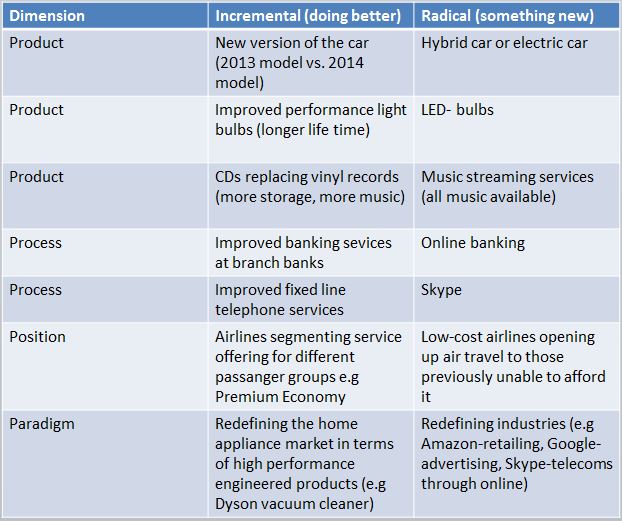
The framework groups innovation into four areas: product, process, position and paradigm. They are sometimes described as the four dimensions of innovation. An organisation can focus on one area or combine several to create greater change.
Product innovation
Product innovation involves creating a new product or service, or significantly improving one that already exists. This may mean adding features, improving quality, making a service easier to use or offering a completely different solution to a customer need.
For example, a business might develop a reusable alternative to a disposable product, or a bank might introduce a mobile service that allows customers to complete tasks previously requiring a branch visit. Product innovation is not limited to physical goods; it applies equally to services and digital experiences.
Process innovation
Process innovation concerns the methods used to create, deliver or support a product or service. It can make work faster, safer, more reliable or less expensive. Changes might involve new equipment, improved logistics, automation or a more effective way of organising a team.
A manufacturer, for instance, could redesign its production line to reduce waste. A public service might introduce an online application process that makes it easier for people to access support. Process improvements are not always visible to customers, but they can have a significant effect on quality and efficiency.
Position innovation
Position innovation changes the context in which an existing product or service is presented and understood. The offering itself may stay largely the same, while its audience, use or image changes.
A familiar example is a product repositioned for a new market. A food brand might present an everyday snack as a convenient option for busy professionals, rather than focusing on its traditional family audience. Position innovation can also involve reaching a new group of customers or communicating a different benefit.
Paradigm innovation
Paradigm innovation changes the underlying assumptions, values or business model that shape how an organisation works. It asks whether the organisation is solving the right problem—and whether it could create value in a fundamentally different way.
For example, a company that once earned revenue only by selling equipment might move towards a subscription service that provides ongoing access and support. The shift is more than a new product feature: it changes how the organisation thinks about its customers, its income and its role in the market.
How the 4Ps work together
The four areas are connected, and a single innovation can involve more than one. A company introducing a new subscription service might create a new offering (product), redesign its billing system (process), target a different customer group (position) and adopt a recurring-revenue business model (paradigm).
The 4Ps can also help organisations spot gaps in their approach. If most improvements focus on products, there may be opportunities to rethink processes or explore new markets. If a sector is changing rapidly, reconsidering the organisation’s business model may be just as important as developing new features.
Using the framework in practice
To apply the 4Ps, begin by identifying a customer, operational or market challenge. Then ask four questions:
- Product: What could be created or improved?
- Process: How could it be produced or delivered differently?
- Position: Could it serve a different audience or be understood in a new way?
- Paradigm: What assumptions or business models could be reconsidered?
Ideas should be tested rather than treated as guaranteed solutions. Small trials, feedback from users and clear measures of success can help an organisation learn what works before committing significant resources.
Conclusion
The 4Ps of innovation provide a straightforward framework for looking beyond new products and technologies. They encourage organisations to consider improvements to what they offer, how they operate, where and to whom they offer it, and the assumptions behind their business model. Used together, the four perspectives can help turn creative ideas into meaningful and lasting change.
Mastering the 4Ps of Innovation: 8 Essential Tips for Business Growth
- Improve products to meet changing customer needs.
- Test new product ideas with users early.
- Streamline processes to reduce waste.
- Use technology to speed up delivery.
- Reposition offers for new audiences.
- Refresh how customers discover your products.
- Rethink your business model to create value.
- Challenge assumptions about how your organisation works.
Improve products to meet changing customer needs.
Improve your products by paying close attention to how customers’ needs, preferences and circumstances change over time. Gather feedback, monitor emerging trends and identify where existing features no longer meet expectations. Use these insights to refine your offering—whether that means improving quality, adding useful features or making the product easier to use. Regular, customer-led improvements can help keep your products relevant and strengthen customer loyalty.
Test new product ideas with users early.
Test new product ideas with users as early as possible, before investing heavily in development. Sharing sketches, prototypes or a simple description of the concept can reveal whether it solves a real problem, which features matter most and what needs improving. Listen to users’ feedback without defending the idea, then refine and test it again. Early testing helps reduce the risk of building something people do not need and gives the team clearer direction.
Streamline processes to reduce waste.
Streamlining processes is a practical form of process innovation that can reduce waste, save time and improve the quality of work. Start by mapping each step, then look for delays, duplication, unnecessary paperwork or materials that could be avoided. Involve the people who carry out the work, as they are often best placed to spot inefficiencies. Test small changes, measure their impact and refine the process over time. The aim is not simply to work faster, but to make the process more effective while maintaining a good experience for customers and staff.
Use technology to speed up delivery.
Using technology to speed up delivery is a practical example of process innovation within the 4Ps framework. Digital tools, automation and real-time tracking can help organisations complete tasks more quickly, reduce delays and get products or services to customers sooner. The key is to choose technology that addresses a genuine bottleneck, train staff to use it effectively and monitor whether it improves the experience as well as the speed of delivery.
Reposition offers for new audiences.
Repositioning an offer for a new audience means presenting an existing product or service in a way that speaks to a different group’s needs, priorities or circumstances. The core offer may stay much the same, but its messaging, features or delivery can be adapted to make it more relevant. Research potential customers first, then test the new positioning to see whether it resonates.
Refresh how customers discover your products.
Refresh how customers discover your products by exploring new channels and making it easier for people to find, understand and try what you offer. This is an example of position innovation: the product may stay the same, but the way it is presented and introduced to customers changes. Consider where your audience looks for recommendations, compare options or seek advice, then test approaches such as partnerships, social media, in-store demonstrations or clearer product information. Use customer feedback and engagement data to see which changes genuinely improve discovery.
Rethink your business model to create value.
Rethinking your business model is a form of paradigm innovation: it challenges how your organisation creates, delivers and captures value. Consider whether a different pricing approach, subscription service, partnership or route to market could better meet customers’ needs and create lasting value. Test promising ideas on a small scale, gather feedback and refine the model before making wider changes.
Challenge assumptions about how your organisation works.
Challenge assumptions about how your organisation works by questioning established routines, business models and ideas about what customers need. Ask whether tasks could be done differently, services delivered in a new way or value created through a different model. This can reveal opportunities for paradigm innovation—the kind of change that reshapes an organisation’s approach, rather than simply improving an existing product or process.