
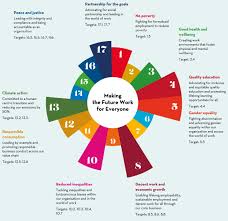
The UN Agenda 2030: A Blueprint for Sustainable Development
The United Nations Agenda 2030, also known as the Sustainable Development Goals (SDGs), is a comprehensive plan of action adopted by all UN Member States in 20
This ambitious agenda outlines a set of 17 interconnected goals designed to address global challenges and build a more sustainable future for people and the planet.
At the heart of the UN Agenda 2030 is the commitment to end poverty, protect the planet, and ensure prosperity for all by the year 20
Each goal targets specific areas such as eradicating hunger, promoting gender equality, ensuring access to clean water and sanitation, and combating climate change.
One of the key principles of the Agenda 2030 is leaving no one behind. This means that efforts to achieve sustainable development must reach all segments of society, including those who are most vulnerable and marginalized. By prioritising inclusivity and equality, the agenda aims to create a more just and equitable world for everyone.
Implementing the SDGs requires collaboration and partnership at local, national, and global levels. Governments, businesses, civil society organisations, and individuals all have a role to play in advancing the goals of Agenda 20
By working together towards common objectives, we can make significant progress towards a more sustainable and prosperous future.
As we approach the year 2030, it is essential for countries around the world to accelerate their efforts in achieving the targets set out in the UN Agenda. While significant strides have been made in some areas, there is still much work to be done to ensure that we meet our collective commitments and create a world that is more resilient, inclusive, and environmentally sustainable.
UN Agenda 2030: A Comprehensive Blueprint for Global Progress and Sustainability
- Comprehensive plan of action for addressing global challenges
- Targets specific areas such as poverty eradication and gender equality
- Promotes inclusivity and equality through the principle of leaving no one behind
- Encourages collaboration and partnership among governments, businesses, and civil society
- Aims to create a more just and equitable world for all segments of society
- Provides a roadmap for achieving sustainable development by 2030
- Focuses on environmental sustainability and combating climate change
Challenges and Criticisms of Implementing the UN Agenda 2030: Resource Limitations, Goal Complexity, and Societal Change
- Some countries may lack the resources and capacity to effectively implement the UN Agenda 2030 goals.
- The sheer number of 17 interconnected goals may make it challenging for some nations to focus and prioritise their efforts.
- Achieving universal access to basic services such as healthcare, education, and clean water by 2030 is a monumental task that may face logistical and financial hurdles.
- Political instability and conflicts in certain regions could hinder progress towards the SDGs.
- Balancing economic growth with environmental conservation goals outlined in the agenda may require significant policy changes that could face resistance from industries and stakeholders.
- Ensuring accountability and transparency in the implementation of the SDGs across different sectors and countries poses a significant challenge.
- Changing societal attitudes and behaviours to align with sustainable development principles can be a slow process that requires continuous education and awareness campaigns.
Comprehensive plan of action for addressing global challenges
The UN Agenda 2030 stands out as a significant pro due to its comprehensive plan of action for addressing global challenges. By outlining 17 interconnected Sustainable Development Goals (SDGs), this initiative provides a structured framework for tackling pressing issues such as poverty, inequality, climate change, and environmental degradation on a global scale. This holistic approach ensures that efforts are coordinated and focused, leading to more effective solutions that have the potential to create positive and lasting impact across diverse regions and communities worldwide.
Targets specific areas such as poverty eradication and gender equality
One of the key strengths of the UN Agenda 2030 is its focus on targeting specific areas such as poverty eradication and gender equality. By setting clear and measurable targets in these crucial areas, the agenda provides a roadmap for addressing some of the most pressing global challenges. Through dedicated efforts to lift people out of poverty and promote gender equality, the Agenda 2030 aims to create a more just and inclusive world where everyone has the opportunity to thrive. By prioritising these fundamental issues, the agenda lays a solid foundation for sustainable development that benefits individuals, communities, and societies as a whole.
Promotes inclusivity and equality through the principle of leaving no one behind
One of the key strengths of the UN Agenda 2030 is its emphasis on promoting inclusivity and equality through the principle of leaving no one behind. By prioritising the needs of all segments of society, including those who are most vulnerable and marginalised, the agenda ensures that sustainable development efforts reach everyone. This commitment to inclusivity not only fosters a more just and equitable world but also empowers individuals and communities to actively participate in shaping their own futures. Through this pro-active approach, the UN Agenda 2030 paves the way for a more inclusive and equal society where every voice is heard and every person has the opportunity to thrive.
Encourages collaboration and partnership among governments, businesses, and civil society
One of the key strengths of the UN Agenda 2030 is its emphasis on fostering collaboration and partnership among governments, businesses, and civil society organisations. By encouraging these diverse stakeholders to work together towards common goals, the agenda promotes a holistic approach to addressing global challenges. This collaborative effort allows for the pooling of resources, expertise, and innovative ideas from various sectors, leading to more effective and sustainable solutions. Ultimately, this spirit of cooperation helps in building stronger relationships, sharing best practices, and maximising impact in advancing the Sustainable Development Goals.
Aims to create a more just and equitable world for all segments of society
One of the key advantages of the UN Agenda 2030 is its focus on creating a more just and equitable world for all segments of society. By prioritising inclusivity and equality, the agenda aims to address the needs of the most vulnerable and marginalised populations, ensuring that no one is left behind in the pursuit of sustainable development. This proactive approach not only promotes social cohesion but also fosters a sense of shared responsibility in building a more fair and balanced global community.
Provides a roadmap for achieving sustainable development by 2030
One significant advantage of the UN Agenda 2030 is that it provides a clear roadmap for achieving sustainable development by the year 2030. By outlining specific goals and targets across various sectors, the agenda offers a structured framework for countries and stakeholders to align their efforts towards creating a more sustainable and equitable world. This roadmap not only helps in tracking progress but also serves as a guide for policymakers, businesses, and communities to focus their resources and actions on key areas that are crucial for long-term environmental, social, and economic sustainability.
Focuses on environmental sustainability and combating climate change
The UN Agenda 2030 stands out for its strong emphasis on environmental sustainability and the urgent need to combat climate change. By prioritising these critical issues, the agenda recognises the interconnectedness of environmental health with social and economic well-being. Through targeted goals and actions, such as promoting renewable energy, conserving ecosystems, and reducing carbon emissions, the Agenda 2030 aims to safeguard our planet for future generations. By addressing climate change head-on, this proactively addresses one of the most pressing challenges of our time, fostering a more sustainable and resilient world for all.
Some countries may lack the resources and capacity to effectively implement the UN Agenda 2030 goals.
Some countries may face challenges in effectively implementing the UN Agenda 2030 goals due to a lack of resources and capacity. Inadequate funding, limited infrastructure, and institutional constraints can hinder their ability to make significant progress towards achieving the Sustainable Development Goals. Without sufficient support and assistance, these countries may struggle to address pressing issues such as poverty, inequality, and environmental degradation. It is crucial for the international community to provide assistance and collaboration to ensure that all countries have the necessary means to work towards a more sustainable future outlined in the UN Agenda 2030.
The sheer number of 17 interconnected goals may make it challenging for some nations to focus and prioritise their efforts.
The complexity of the United Nations Agenda 2030 lies in its extensive framework of 17 interconnected goals, which can present a challenge for some nations in terms of focusing and prioritising their efforts. With a diverse set of objectives ranging from poverty eradication to climate action, countries may find it daunting to allocate resources and attention effectively across all areas. This breadth of goals could potentially lead to fragmentation in implementation strategies, making it crucial for nations to carefully assess their priorities and develop coherent action plans to ensure meaningful progress towards sustainable development.
Achieving universal access to basic services such as healthcare, education, and clean water by 2030 is a monumental task that may face logistical and financial hurdles.
Ensuring universal access to essential services like healthcare, education, and clean water by 2030 poses a significant challenge within the framework of the UN Agenda. The sheer scale of this undertaking, coupled with potential logistical constraints and financial limitations, presents a formidable obstacle to achieving these goals. Addressing the complex interplay of factors involved in providing widespread access to basic services will require substantial resources, innovative strategies, and strong international cooperation to overcome the hurdles that stand in the way of realising this aspect of the Agenda 2030.
Political instability and conflicts in certain regions could hinder progress towards the SDGs.
Political instability and conflicts in certain regions pose a significant challenge to the successful implementation of the UN Agenda 2030 and the achievement of the Sustainable Development Goals (SDGs). In areas affected by turmoil and unrest, resources that could be allocated to sustainable development initiatives are often diverted towards addressing immediate security concerns. Moreover, ongoing conflicts can disrupt essential services, hinder economic growth, and exacerbate social inequalities, making it difficult to make meaningful progress towards the SDGs. Addressing political instability and conflict is crucial in order to create a conducive environment for sustainable development efforts to flourish and positively impact communities in need.
Balancing economic growth with environmental conservation goals outlined in the agenda may require significant policy changes that could face resistance from industries and stakeholders.
Balancing economic growth with environmental conservation goals as outlined in the UN Agenda 2030 may present a significant challenge due to the potential need for substantial policy changes. These changes could encounter resistance from industries and stakeholders who may prioritise short-term profits over long-term sustainability. Implementing measures to protect the environment while fostering economic development may require reevaluating traditional business practices and investing in more sustainable technologies, which could face opposition from those reluctant to adapt. Finding a harmonious equilibrium between economic progress and environmental preservation will necessitate navigating complex interests and fostering dialogue to ensure that all sectors of society are aligned towards achieving a more sustainable future.
Ensuring accountability and transparency in the implementation of the SDGs across different sectors and countries poses a significant challenge.
Ensuring accountability and transparency in the implementation of the Sustainable Development Goals (SDGs) across various sectors and countries presents a notable challenge within the framework of the UN Agenda 2030. The complexity of monitoring progress, tracking funding sources, and evaluating the impact of initiatives can lead to gaps in oversight and hinder effective governance. Without robust mechanisms for accountability, there is a risk that commitments may not be met, resources may be mismanaged, and disparities in achievement among different regions could persist. Addressing this con requires a concerted effort to strengthen monitoring systems, enhance data collection processes, and foster greater transparency in decision-making to ensure that the goals are being pursued in a responsible and accountable manner.
Changing societal attitudes and behaviours to align with sustainable development principles can be a slow process that requires continuous education and awareness campaigns.
Changing societal attitudes and behaviours to align with sustainable development principles poses a significant challenge within the framework of the UN Agenda 2030. This con highlights the inherent complexity of shifting ingrained habits and beliefs towards more environmentally conscious practices. It necessitates ongoing education and awareness campaigns to cultivate a collective understanding of the importance of sustainable development. Addressing this obstacle requires patience, persistence, and a long-term commitment to fostering a culture that values sustainability at its core.