
Nessler’s Reagent: What It Is and How It Works
Nessler’s reagent is a chemical test used to detect ammonia and ammonium ions in a sample. It is best known for producing a colour change: a sample may turn yellow or brown when ammonia is present. The intensity of the colour can also be used to estimate how much ammonia the sample contains.
What is Nessler’s reagent?
The reagent is an alkaline solution containing potassium tetraiodomercurate(II), a mercury-containing compound. It is commonly prepared from mercury(II) iodide and potassium iodide in a strong alkali. Because it contains mercury, it is highly hazardous and must be handled and disposed of with care.
How does the test work?
When Nessler’s reagent is added to a sample containing ammonia or ammonium ions, a reaction produces yellow, orange-brown or brown colouring. At higher concentrations, a brown precipitate may form. In general, a deeper colour indicates a greater amount of ammonia, although the result can be affected by the sample and the test conditions.
The reaction takes place in alkaline conditions, which help make ammonia available to react with the reagent. The chemistry involves mercury–iodide complexes, so the reaction is more complex than a simple colour-forming equation suggests.
Uses
Nessler’s reagent has been used in analytical chemistry and water testing to check for ammonia. It can be applied to drinking water, wastewater and laboratory samples, as well as in teaching demonstrations of chemical analysis.
For quantitative testing, the colour of the treated sample is compared with standards of known ammonia concentration, either by eye or with an instrument such as a colorimeter or spectrophotometer. This gives an estimate rather than an unrestricted measurement: the standards and samples need to be tested under comparable conditions.
Limitations and possible interference
The test is not equally reliable for every sample. Natural colour, suspended particles and turbidity can make the colour difficult to assess. Other substances, including some amines, sulphides and metal ions, may interfere with the reaction. A suitable blank, sample preparation or alternative analytical method may be needed, depending on what is being tested.
Nessler’s reagent is also less suitable where mercury-based chemicals are restricted or where a method with lower environmental impact is required. Other ammonia tests, including methods based on indophenol chemistry, are often used for routine water analysis.
Safety and disposal
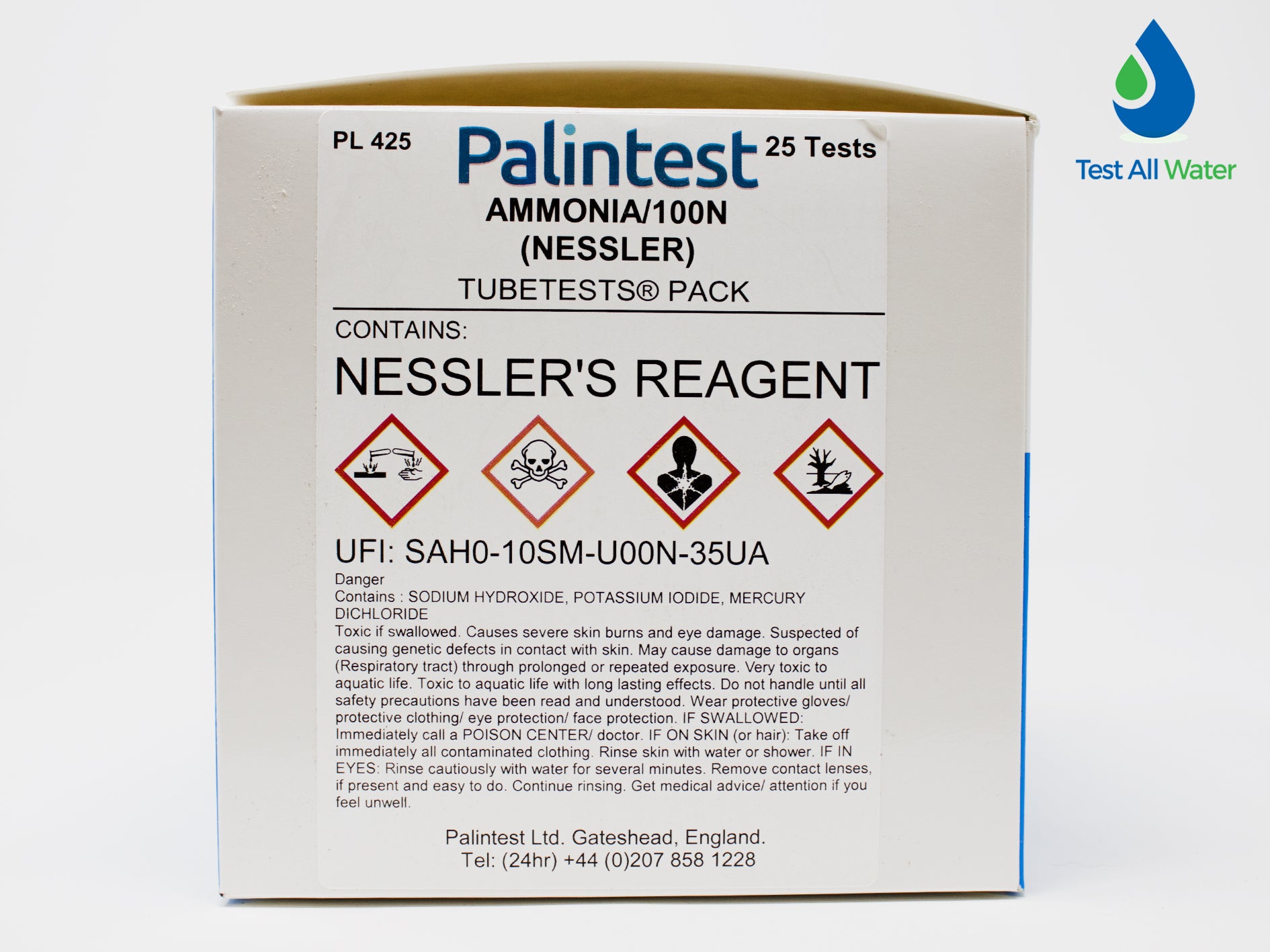
Nessler’s reagent contains mercury, which is toxic and can cause serious harm to people and the environment. It should only be used by trained personnel following the relevant safety data sheet and laboratory procedures. Appropriate protective equipment, careful handling and suitable containment are essential.
Never pour the reagent or treated samples down a sink or place them in ordinary rubbish. Collect mercury-containing waste separately and arrange disposal through an authorised hazardous-waste service, in accordance with local regulations.
Summary
Nessler’s reagent is a sensitive colour test for ammonia and ammonium ions, with darker yellow-to-brown results generally indicating higher concentrations. Its usefulness is balanced by limitations from sample interference and, especially, the significant health and environmental hazards associated with mercury.
Essential Safety Tips for Handling Nessler’s Reagent
- Use Nessler’s reagent to test for ammonia or ammonium ions.
- Wear suitable gloves, eye protection and a lab coat.
- Handle it in a fume cupboard to avoid exposure.
- Treat it as highly toxic
- Avoid skin contact, splashes and inhaling aerosols.
- Never pour it down the sink or into general waste.
- Collect used reagent and test solutions as hazardous mercury waste.
- Store it in a clearly labelled, tightly closed container.
- Follow your laboratory’s safety data sheet and disposal procedures.
Use Nessler’s reagent to test for ammonia or ammonium ions.
Use Nessler’s reagent to test a sample for ammonia or ammonium ions: when present, these substances produce a yellow-to-brown colour, with a deeper colour generally indicating a higher concentration. The test can be affected by other substances in the sample, so results may need to be checked against suitable standards. Nessler’s reagent contains toxic mercury compounds; handle it only with appropriate laboratory precautions and dispose of it as hazardous waste—never pour it down the sink.
Wear suitable gloves, eye protection and a lab coat.
When handling Nessler’s reagent, wear suitable chemical-resistant gloves, eye protection and a laboratory coat to reduce the risk of exposure from splashes or spills. As the reagent contains mercury and is highly hazardous, follow your laboratory’s safety procedures and consult the relevant safety data sheet; protective clothing does not replace careful handling.
Handle it in a fume cupboard to avoid exposure.
Handle Nessler’s reagent in a functioning fume cupboard to minimise exposure to hazardous vapours, mists or splashes. Wear appropriate protective equipment, follow your laboratory’s safety procedures and consult the safety data sheet before use.
Treat it as highly toxic
Treat Nessler’s reagent as highly toxic: it contains mercury compounds that can seriously harm health and pollute the environment. Only trained people should handle it, using appropriate protective equipment and following the safety data sheet and laboratory procedures. Avoid skin contact, inhalation and accidental spills, and never pour the reagent or any treated samples down a drain or put them in general waste. Collect all mercury-containing waste separately for disposal through an authorised hazardous-waste service.
Avoid skin contact, splashes and inhaling aerosols.
When handling Nessler’s reagent, avoid all skin contact and take care to prevent splashes, as it contains toxic mercury compounds. Work in a suitable, well-ventilated area and avoid creating or breathing in aerosols. Wear appropriate protective equipment, including chemical-resistant gloves and eye protection, and follow your laboratory’s safety procedures.
Never pour it down the sink or into general waste.
Never pour Nessler’s reagent, or samples containing it, down the sink or into general waste. The reagent contains mercury, which is toxic and can contaminate water and soil. Collect it in a clearly labelled, suitable hazardous-waste container and arrange disposal through an authorised service, following your laboratory’s procedures and local regulations.
Collect used reagent and test solutions as hazardous mercury waste.
After using Nessler’s reagent, collect the reagent and all test solutions that may contain it in a clearly labelled, sealed container for hazardous mercury waste. Do not pour them down the sink or dispose of them with general rubbish. Follow your organisation’s safety procedures and local regulations, and arrange disposal through an authorised hazardous-waste service.
Store it in a clearly labelled, tightly closed container.
Store Nessler’s reagent in a clearly labelled, tightly closed container to prevent leaks, spills and contamination. The label should identify the mercury hazard and any other relevant risks, and the container should be kept in a suitable, secure storage area in line with the product’s safety data sheet and local regulations.
Follow your laboratory’s safety data sheet and disposal procedures.
Always follow your laboratory’s safety data sheet and disposal procedures when working with Nessler’s reagent. It contains mercury compounds, which are hazardous to health and the environment, so handle it only with the required protective equipment and keep it away from drains and general waste. Collect the reagent and any contaminated materials in the designated hazardous-waste containers, and arrange disposal through your laboratory’s approved waste service.