
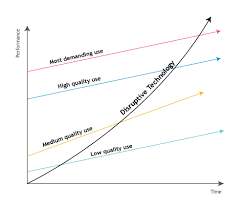
The Concept of Disruptive Innovation by Christensen
Disruptive innovation, a term coined by Harvard Business School professor Clayton M. Christensen in his seminal book “The Innovator’s Dilemma,” has become a cornerstone in the field of business strategy and management.
Christensen’s theory suggests that disruptive innovations are innovations that create new markets and value networks, eventually disrupting existing markets and displacing established market-leading firms, products, and alliances.
Unlike sustaining innovations that improve existing products or services for established customers, disruptive innovations target underserved or non-consumers with simpler, more affordable solutions. These innovations often start at the low end of the market but gradually improve to meet the needs of mainstream customers.
One of the key characteristics of disruptive innovation is that it initially may not be as attractive to existing customers of established companies due to its lower performance on traditional metrics. However, over time, these disruptive technologies or business models gain momentum and redefine industry standards.
Companies that fail to recognise and respond to disruptive innovation risk being left behind as new entrants capture market share and customer loyalty. Christensen’s framework emphasises the importance of agility, experimentation, and strategic foresight in navigating the challenges posed by disruptive forces in an ever-evolving business landscape.
In conclusion, Christensen’s concept of disruptive innovation underscores the need for businesses to continually innovate and adapt to changing market dynamics. By embracing disruption rather than resisting it, organisations can position themselves for long-term success in an increasingly competitive environment.
Leveraging Christensen’s Disruptive Innovation: 7 Key Advantages for Navigating Modern Markets
- 1. Encourages businesses to focus on creating new markets and value networks.
- 2. Helps in identifying opportunities to disrupt existing markets and challenge market leaders.
- 3. Promotes innovation that targets underserved or non-consumers with simpler, more affordable solutions.
- 4. Highlights the importance of adapting to changing customer needs and preferences.
- 5. Emphasises the value of agility and strategic foresight in navigating disruptive forces.
- 6. Encourages companies to embrace experimentation and continuous improvement.
- 7. Provides a framework for organisations to stay competitive in dynamic business environments.
Challenges of Christensen’s Disruptive Innovation: Navigating Market Instability and Balancing Innovation Risks
- Disruptive innovation can lead to market uncertainty and instability, making it challenging for established companies to predict future trends.
- Existing businesses may struggle to adapt quickly to disruptive technologies or business models, risking obsolescence if they fail to innovate in time.
- Disruptive innovation can create a divide between early adopters of new solutions and traditional customers, potentially alienating loyal customer bases.
- Investing in disruptive innovation projects carries inherent risks, as not all ventures may succeed or generate the expected returns on investment.
- The focus on disruption may divert attention and resources away from sustaining innovations that are crucial for maintaining current market positions and profitability.
1. Encourages businesses to focus on creating new markets and value networks.
Christensen’s concept of disruptive innovation encourages businesses to shift their focus towards creating new markets and value networks. By identifying unmet needs and targeting underserved customer segments, companies can introduce innovative products or services that have the potential to disrupt existing markets. This proactive approach not only fosters creativity and entrepreneurship but also opens up opportunities for growth and differentiation in a competitive landscape. Embracing the challenge of exploring new market spaces can lead to sustainable success and long-term relevance for businesses willing to venture beyond traditional boundaries.
2. Helps in identifying opportunities to disrupt existing markets and challenge market leaders.
One significant advantage of Christensen’s disruptive innovation theory is its ability to help businesses identify opportunities to disrupt existing markets and challenge market leaders. By understanding the principles of disruptive innovation, companies can pinpoint underserved customer segments or unmet needs that traditional market leaders may overlook. This insight enables organisations to develop innovative products or services that have the potential to reshape industries and compete effectively against established players, fostering a culture of continuous evolution and market disruption.
3. Promotes innovation that targets underserved or non-consumers with simpler, more affordable solutions.
One of the significant advantages of Christensen’s disruptive innovation theory is its emphasis on promoting innovation that targets underserved or non-consumers with simpler, more affordable solutions. By focusing on this approach, businesses have the opportunity to tap into new markets and create value for segments that may have been overlooked by traditional strategies. This not only expands the reach of products and services but also fosters a culture of inclusivity and accessibility, driving positive social impact while unlocking untapped potential for growth and market expansion.
4. Highlights the importance of adapting to changing customer needs and preferences.
Christensen’s concept of disruptive innovation highlights the crucial significance of adapting to evolving customer needs and preferences. By focusing on creating solutions that resonate with underserved or non-consumers through simpler and more affordable offerings, businesses can proactively meet changing market demands. This approach encourages companies to stay attuned to shifting customer preferences, enabling them to pivot their strategies and products in response to emerging trends. Embracing disruptive innovation not only fosters customer loyalty but also positions organisations to thrive in dynamic market environments where flexibility and customer-centricity are key drivers of success.
5. Emphasises the value of agility and strategic foresight in navigating disruptive forces.
Emphasising the value of agility and strategic foresight in navigating disruptive forces, Christensen’s theory of disruptive innovation highlights the importance of adaptability and forward-thinking in today’s dynamic business environment. By being agile, businesses can respond promptly to emerging trends and opportunities, while strategic foresight enables them to anticipate market shifts and proactively shape their strategies for long-term success. This proactive approach not only helps organisations stay ahead of competitors but also allows them to leverage disruptive forces as catalysts for innovation and growth.
6. Encourages companies to embrace experimentation and continuous improvement.
One significant advantage of Christensen’s disruptive innovation theory is that it encourages companies to embrace experimentation and continuous improvement. By promoting a culture of innovation and adaptability, businesses are motivated to explore new ideas, test different strategies, and iterate on existing processes. This emphasis on continuous learning and evolution enables organisations to stay ahead of the curve, anticipate market shifts, and proactively respond to changing customer needs. Through a commitment to experimentation and improvement, companies can foster a dynamic environment that fosters creativity, resilience, and long-term success in an ever-changing business landscape.
7. Provides a framework for organisations to stay competitive in dynamic business environments.
Christensen’s theory of disruptive innovation offers a valuable framework for organisations to maintain competitiveness in dynamic business environments. By understanding and embracing disruptive forces, companies can proactively adapt their strategies and operations to stay ahead of the curve. This approach encourages businesses to constantly evaluate market trends, identify emerging opportunities, and innovate their products or services to meet evolving customer needs. Ultimately, leveraging Christensen’s framework enables organisations to not only survive but thrive in an ever-changing landscape by fostering a culture of continuous improvement and strategic adaptation.
Disruptive innovation can lead to market uncertainty and instability, making it challenging for established companies to predict future trends.
Disruptive innovation, while heralded for its potential to drive industry evolution, presents a significant challenge in the form of market uncertainty and instability. Established companies often find it difficult to predict future trends when disruptive technologies or business models emerge, disrupting existing market dynamics. This unpredictability can create a sense of unease among industry leaders who must navigate uncharted territory and make strategic decisions amidst evolving landscapes. As a result, the inherent ambiguity associated with disruptive innovation can pose obstacles for established firms seeking to maintain their competitive edge and relevance in the face of rapid change.
Existing businesses may struggle to adapt quickly to disruptive technologies or business models, risking obsolescence if they fail to innovate in time.
In the realm of Christensen’s disruptive innovation theory, a notable con emerges as existing businesses often find themselves grappling with the challenge of swiftly adjusting to disruptive technologies or novel business models. Should these established entities falter in embracing innovation promptly, they run the perilous risk of facing obsolescence within their respective industries. The inertia or reluctance to adapt to emerging trends and shifts in consumer preferences can leave such businesses vulnerable to being overtaken by more agile competitors who adeptly harness disruptive forces to their advantage. This con underscores the critical importance for organisations to cultivate a culture of continuous innovation and proactive adaptation in order to remain relevant and competitive in a rapidly evolving marketplace.
Disruptive innovation can create a divide between early adopters of new solutions and traditional customers, potentially alienating loyal customer bases.
Disruptive innovation, as proposed by Christensen, can inadvertently lead to a division between early adopters of new solutions and traditional customers, potentially causing friction and alienation within loyal customer bases. The introduction of disruptive technologies or business models may cater more to the needs and preferences of a new segment of consumers, leaving existing customers feeling overlooked or dissatisfied. This divide can pose a significant challenge for companies seeking to balance innovation with customer retention, highlighting the importance of effectively managing transitions and communication strategies to mitigate any negative impacts on customer relationships.
Investing in disruptive innovation projects carries inherent risks, as not all ventures may succeed or generate the expected returns on investment.
Investing in disruptive innovation projects carries inherent risks, as not all ventures may succeed or generate the expected returns on investment. While the potential rewards of pioneering new markets and technologies can be significant, there is a level of uncertainty associated with disruptive innovations that traditional business models may not encounter. Companies must carefully weigh the risks and benefits of pursuing disruptive strategies, considering factors such as market acceptance, regulatory challenges, and resource allocation. Failure to manage these risks effectively could result in financial losses and reputational damage, highlighting the importance of thorough planning and strategic decision-making when embarking on disruptive innovation initiatives.
The focus on disruption may divert attention and resources away from sustaining innovations that are crucial for maintaining current market positions and profitability.
In the realm of Christensen’s disruptive innovation theory, a notable drawback emerges whereby the relentless emphasis on disruptive technologies and business models could potentially lead companies to overlook the significance of sustaining innovations. These sustaining innovations play a vital role in enhancing existing products or services to meet evolving customer demands and maintain competitive advantages in established markets. By disproportionately allocating attention and resources towards disruptive ventures, organisations risk neglecting the essential task of nurturing and improving their core offerings, ultimately jeopardising their current market positions and profitability in the long run. Balancing the pursuit of disruptive innovation with a strategic focus on sustaining innovations is crucial for businesses aiming to achieve sustainable growth and longevity amidst dynamic market conditions.