
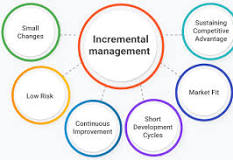
Incremental Innovation: Examples and Why It Matters
Innovation does not always mean inventing something entirely new. Many important improvements happen gradually, as organisations refine products, services and ways of working. This is known as incremental innovation: making a series of modest changes that improve what already exists.
Each change may seem small on its own. Over time, however, these improvements can make a product easier to use, reduce costs, improve reliability or help a business keep pace with changing customer needs.
What is incremental innovation?
Incremental innovation builds on an existing product, service or process rather than replacing it with a completely different solution. It may involve improving a feature, updating a design, streamlining a process or making a product more efficient.
It differs from radical innovation, which introduces a major change or creates a new market. Incremental innovation is usually less disruptive, and it can often be tested and introduced in stages.
Examples of incremental innovation
Improving smartphone cameras
Smartphone cameras have developed through many incremental improvements. Manufacturers have added features such as better low-light performance, image stabilisation, faster focusing and more capable editing tools. These updates build on the familiar camera function while making it more useful and reliable.
Making online checkouts easier
An online retailer might improve its checkout by reducing the number of steps, offering more payment options or making delivery information clearer. None of these changes fundamentally alters online shopping, but together they can make the experience quicker and less frustrating for customers.
Updating software
Software providers regularly release updates that fix bugs, improve security and add small features. A clearer menu, better search function or more accessible settings can make a familiar application easier to use without requiring customers to learn a completely new system.
Improving product packaging
A food or household-goods company might redesign packaging so it is easier to open, uses less material or can be recycled more readily. The product itself may remain much the same, while the change improves convenience or reduces environmental impact.
Making vehicles more efficient
Vehicle manufacturers can make incremental improvements to existing models by refining their engines, reducing weight or improving aerodynamics. These changes may help lower fuel consumption or emissions while retaining the basic design and purpose of the vehicle.
Streamlining a workplace process
A business might review how staff handle customer enquiries and introduce a shared system for tracking requests. If this reduces duplicate work and helps employees respond more quickly, it is an example of process innovation. The improvement may be modest, but it can have a meaningful effect when used every day.
Refining a recipe or product formula
A manufacturer may adjust a product’s ingredients to improve its taste, texture, shelf life or nutritional profile. These changes can be introduced gradually, with testing and customer feedback helping to determine whether the revised version is an improvement.
Why incremental innovation is valuable
Incremental innovation can help organisations respond to customer feedback, remain competitive and improve efficiency. Because changes are often made in stages, they may be easier to test than a large-scale transformation. This gives teams an opportunity to learn from each update and make further adjustments.
Small improvements can also build on one another. A more efficient process may save time; that time can then be used to improve customer service or develop another product feature. The cumulative effect can be substantial, even when no single change appears revolutionary.
How organisations can encourage it
- Listen to customers: Feedback, complaints and support requests can reveal practical opportunities for improvement.
- Invite ideas from staff: Employees who work with products and processes every day may spot problems that are not obvious to senior teams.
- Test changes on a small scale: Trials can show whether an idea works before it is introduced more widely.
- Measure the results: Clear measures help establish whether a change has improved quality, cost, speed or customer satisfaction.
- Keep learning: Not every adjustment will succeed. Reviewing results helps organisations make better decisions about what to try next.
Conclusion
Incremental innovation is the steady improvement of products, services and processes. From a simpler checkout to more efficient packaging, small changes can deliver practical benefits for customers, employees and organisations. While incremental innovation may not attract the attention of a dramatic breakthrough, its lasting impact can be significant.
Unlocking Potential: How Incremental Innovation Transforms Everyday Products
- Show how small changes improve familiar products.
- Make innovation easier to understand through real-world examples.
- Highlight practical ways to improve customer experience.
- Demonstrate how gradual updates can reduce risk.
- Inspire teams to spot everyday improvement opportunities.
- Show how small gains can add up over time.
Challenges of Incremental Innovation: Navigating Subtle Changes and Their Impact
- Improvements may be too small to stand out.
- Competitors can quickly copy changes.
- Small updates may distract from bigger opportunities.
- Frequent changes can increase costs.
- Customer feedback may not represent everyone.
- Gradual improvements can preserve outdated designs.
Show how small changes improve familiar products.
Examples of incremental innovation show how small changes can make familiar products more useful without changing what people value about them. A smartphone camera that takes clearer low-light photos, packaging that is easier to open, or software with a simpler menu all build on an existing product. These practical refinements can make everyday experiences more convenient, reliable and satisfying over time.
Make innovation easier to understand through real-world examples.
Real-world examples make incremental innovation easier to understand by showing how small, familiar changes can lead to meaningful improvements. A clearer app menu, more convenient packaging or a quicker online checkout demonstrates that innovation does not always involve a completely new invention. These examples help people recognise incremental innovation in everyday life and see how gradual improvements can benefit customers and organisations.
Highlight practical ways to improve customer experience.
Incremental innovation offers practical ways to improve customer experience by making familiar products and services easier, faster and more enjoyable to use. For example, a retailer could simplify its online checkout, add clearer delivery updates or make returns more straightforward. A software company might improve navigation or introduce a feature requested by users. These small, targeted changes can address everyday frustrations, demonstrate that customer feedback is valued and encourage people to remain loyal.
Demonstrate how gradual updates can reduce risk.
Examples of incremental innovation show how gradual updates can reduce risk. Rather than replacing a product or process all at once, an organisation can introduce a small change, test how it performs and gather feedback before deciding what to do next. For example, a software company might trial a new feature with a limited group of users, identify any problems and refine it before a wider release. This staged approach helps limit disruption, control costs and catch issues early, while allowing improvements to build over time.
Inspire teams to spot everyday improvement opportunities.
Examples of incremental innovation can inspire teams to notice and act on everyday opportunities for improvement. Seeing how small changes—such as simplifying a routine task, improving a product feature or making information easier to find—can deliver real benefits encourages people to share ideas and take initiative. Over time, this habit of looking for practical improvements can strengthen collaboration and help an organisation make steady progress.
Show how small gains can add up over time.
Incremental innovation shows how small gains can add up over time. A series of modest improvements—such as making a product easier to use, reducing waste in a process or speeding up customer service—can create substantial benefits when introduced consistently. Each change builds on the last, helping organisations improve quality, efficiency and customer satisfaction without relying on one major breakthrough.
Improvements may be too small to stand out.
One drawback of incremental innovation is that improvements may be too small to stand out. A slightly faster service, a minor design update or an extra software feature may make an existing product better, but customers might not notice or see a strong reason to choose it over a competitor’s offering. As a result, businesses can struggle to communicate the value of these changes or generate excitement, especially in crowded markets where more distinctive innovations attract greater attention.
Competitors can quickly copy changes.
A drawback of incremental innovation is that competitors can often copy improvements quickly. Small changes, such as a new product feature, a more convenient service or a streamlined process, may be easy to observe and reproduce. As a result, the original business may gain only a short-lived advantage, while rivals catch up without investing the same time and effort in developing the idea. To stay ahead, organisations may need to keep improving and build advantages that are harder to copy, such as strong customer relationships, specialist expertise or a distinctive brand.
Small updates may distract from bigger opportunities.
One potential drawback of incremental innovation is that a steady stream of small updates can distract an organisation from bigger opportunities. Teams may focus on refining existing products and processes because these changes feel familiar and manageable, while overlooking new technologies, unmet customer needs or emerging markets. Over time, this can limit growth and leave the organisation less prepared for major changes in its industry.
Frequent changes can increase costs.
Frequent incremental changes can increase costs, particularly when each update requires new research, testing, staff training or changes to production and support systems. Even small adjustments may involve repeated design and implementation work, while too many updates can create confusion for customers and employees. Without clear priorities and careful cost monitoring, the expense of continual refinement may outweigh the benefits.
Customer feedback may not represent everyone.
Customer feedback can help guide incremental innovation, but it may not reflect the needs of every customer. People who respond to surveys or share complaints are often a small, self-selecting group, while quieter customers and less-represented communities may be overlooked. If a business bases each improvement on this limited feedback, it could end up refining products for some users while making them less useful or accessible to others. Combining customer comments with broader research, usage data and input from diverse groups can help create a more balanced picture.
Gradual improvements can preserve outdated designs.
Gradual improvements can sometimes keep an outdated design in place for longer than it should be. By focusing on small adjustments, an organisation may overlook deeper problems or delay a more fundamental redesign that better meets changing needs. For example, repeatedly adding features to an ageing product may make it more complicated without addressing its underlying limitations. Incremental changes can be useful, but businesses should also assess whether the existing design remains fit for purpose.