
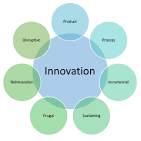
Different Types of Innovation
Innovation is often associated with new technology, but it can take many forms. It may involve creating a product, improving a service, changing how an organisation works or finding a new way to meet people’s needs. Understanding the different types of innovation can help businesses, public services and communities identify where change is possible.
Product innovation
Product innovation involves introducing a new or significantly improved product. This could mean developing a completely new item, adding useful features or improving its performance, design, reliability or accessibility. A product does not have to be high-tech to be innovative: a simpler, more durable or easier-to-use design can make a substantial difference.
Service innovation
Service innovation changes how a service is created or delivered, or introduces a new service altogether. Examples include offering remote appointments, providing personalised support or making a service available through a more convenient channel. Good service innovation often focuses on improving the experience for customers or users.
Process innovation
Process innovation concerns the methods used to produce or deliver a product or service. An organisation might adopt new equipment, automate a routine task or redesign a workflow to reduce delays and waste. The aim may be to improve quality, lower costs, increase safety or make better use of resources.
Business model innovation
A business model describes how an organisation creates value, reaches its customers and earns income or secures funding. Business model innovation changes one or more of these elements. For example, a company might move from selling a product outright to offering it as a subscription, or an organisation might develop a new way to make its services accessible to people who were previously underserved.
Marketing innovation
Marketing innovation involves introducing a new approach to promoting, pricing, packaging or positioning products and services. This may include reaching a different audience, using new communication channels or changing how a product is presented. The purpose is not simply to produce a striking advert, but to connect more effectively with people and communicate value in a fresh way.
Organisational innovation
Organisational innovation changes how an organisation is structured or managed. It might involve new ways of working across teams, more flexible decision-making, different partnerships or changes to workplace practices. These changes can help an organisation respond more quickly, share knowledge and support its staff more effectively.
Incremental and radical innovation
Innovation can also be described by the scale of change involved. Incremental innovation makes gradual improvements to existing products, services or processes. These changes may seem small, but they can build up over time and deliver significant benefits.
Radical innovation represents a much more substantial departure from what came before. It may create a new product category, transform an industry or require new skills and infrastructure. Radical innovation can bring major opportunities, but it is often more uncertain and demanding to develop.
Disruptive innovation
The term disruptive innovation is often used to describe a change that reshapes a market or alters how people access a product or service. In its original business context, disruption refers to a particular pattern: an offering begins by serving an overlooked group or a new market, then improves and becomes a serious alternative to established providers. Not every new technology or successful product is disruptive in this specific sense.
Open and collaborative innovation
Innovation does not always happen within a single organisation. Open innovation involves working with external partners, such as universities, suppliers, customers or other businesses, and sharing ideas or knowledge where appropriate. Collaborative approaches can bring together expertise that would be difficult for one organisation to develop alone.
Social and sustainable innovation
Social innovation develops new approaches to social needs, such as improving access to education, housing or healthcare. It may involve new services, partnerships or ways of organising community support.
Sustainable innovation aims to create value while reducing environmental harm and supporting long-term social and economic wellbeing. This might involve designing products that last longer, using fewer materials, reducing emissions or making supply chains more responsible.
Why the different types matter
These categories can overlap. A new digital service, for instance, may involve product, process and business model innovation at the same time. The categories are useful not as rigid boxes, but as a way to ask better questions: What is changing? Who benefits? How will the change be delivered? And what effects might it have?
Innovation is not limited to dramatic inventions. It can be a practical improvement, a new partnership or a fresh way to solve a familiar problem. By recognising its many forms, organisations can look beyond technology and find opportunities to create lasting value.
Understanding Innovation: Key Differences and Impacts Across Various Types
- What are the main types of innovation?
- What is the difference between product innovation and process innovation?
- What is the difference between incremental and radical innovation?
- What is disruptive innovation, and how does it affect established industries?
- What is the difference between open innovation and closed innovation?
- How can social and sustainable innovation benefit communities and businesses?
What are the main types of innovation?
The main types of innovation include product innovation, which introduces or improves goods and services; process innovation, which changes how they are made or delivered; marketing innovation, which uses new approaches to promotion, pricing or presentation; and organisational innovation, which changes how a business or institution is structured or managed. Business model and service innovation are also common categories. Innovation can additionally be described by its scale, such as incremental improvements or more radical changes.
What is the difference between product innovation and process innovation?
Product innovation introduces a new or improved product or service, such as adding useful features or making it easier to use. Process innovation, by contrast, improves the way a product or service is designed, produced or delivered—for example, by streamlining a workflow or adopting more efficient equipment. In short, product innovation changes what is offered, while process innovation changes how it is made or delivered.
What is the difference between incremental and radical innovation?
Incremental innovation involves making gradual improvements to existing products, services or processes, such as adding useful features or making a service more efficient. Radical innovation brings a substantial change, introducing something significantly new that may create a different market or transform how an industry works. Incremental innovation is generally more predictable, while radical innovation can offer greater potential impact but often involves more uncertainty and risk.
What is disruptive innovation, and how does it affect established industries?
Disruptive innovation is a process in which a new product, service or business model begins by serving people or markets overlooked by established providers, then improves and becomes a strong alternative to mainstream offerings. It can reshape established industries by changing customer expectations, lowering costs or making services more accessible. Established organisations may need to adapt their products, operations and business models to remain competitive, while new entrants can gain opportunities to challenge long-standing ways of working. Not every successful new technology is disruptive; the term describes a particular pattern of market change.
What is the difference between open innovation and closed innovation?
Open innovation involves working with people and organisations outside your own—such as customers, universities, suppliers or other businesses—to develop and share ideas, knowledge and technologies. Closed innovation, by contrast, relies mainly on expertise and research within the organisation, with ideas developed and managed internally. Open innovation can bring in a wider range of perspectives and speed up development, while closed innovation offers greater control over information and intellectual property; the right approach depends on an organisation’s goals, resources and need for collaboration.
How can social and sustainable innovation benefit communities and businesses?
Social and sustainable innovation can help communities by addressing local needs, improving access to essential services and creating opportunities for people to take part in decisions that affect them. For businesses, it can encourage more responsible use of resources, strengthen relationships with customers and communities, and inspire products or services that meet changing needs. By combining social benefit with environmental care and long-term economic value, these approaches can build more resilient communities and organisations.