
Radical Innovation: Rethinking What’s Possible
Radical innovation is the creation of products, services, processes or business models that bring significant change. Rather than making an existing offering a little faster, cheaper or more convenient, it challenges established assumptions and opens up new possibilities.
It can transform an industry, create entirely new markets or change the way people live and work. The shift from physical maps to digital navigation, for example, did more than improve the map: it made real-time directions and location-based services part of everyday life.
Radical and incremental innovation
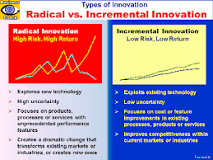
Innovation is often described as either radical or incremental. Incremental innovation improves what already exists: a longer-lasting battery, a simpler booking process or a more efficient manufacturing line. These changes can be valuable and, over time, add up to substantial progress.
Radical innovation involves a more fundamental break from the past. It may rely on new technology, meet a previously unrecognised need or combine existing ideas in a way that changes customer expectations. The distinction is not always clear-cut: an innovation that begins as a niche experiment may gradually reshape an established market.
Where radical ideas come from
Radical innovation rarely comes from technology alone. It often emerges when several forces come together, such as scientific discovery, changing social needs, new regulations or a fresh understanding of how people behave. A breakthrough becomes meaningful when it solves a real problem or enables something people could not do before.
Ideas may come from research teams, start-ups, customers, employees or partnerships between organisations. Listening to people who are often overlooked can also reveal needs that existing products and services fail to address.
Why it matters
For organisations, radical innovation can create new sources of growth and help them respond to major shifts in society or technology. For communities, it has the potential to improve access to essential services, make better use of resources and address longstanding challenges.
However, radical innovation is not valuable simply because it is new. Its worth depends on the difference it makes. A successful innovation should offer a clear benefit and be usable, accessible and responsible. In areas such as health, finance and artificial intelligence, careful consideration of safety, privacy and fairness is especially important.
The challenges of making it work
Radical innovation is uncertain. New ideas may be difficult to test, expensive to develop or poorly understood by potential users. Established systems can also make change difficult: organisations may have processes, skills and investments designed for the status quo.
There is a risk in both directions. Moving too cautiously may leave an organisation unprepared for change, while investing too heavily in an unproven idea can waste resources. The answer is not to remove uncertainty, which is rarely possible, but to learn from it in a disciplined way.
From idea to impact
A practical approach is to start with a clearly defined problem rather than a technology in search of a use. Teams can then explore different solutions, build small prototypes and test them with the people who might use them. Early feedback helps reveal what works, what needs to change and whether the idea is worth developing further.
Organisations can support this work by giving teams time to experiment, bringing together people with different expertise and making room for informed risk-taking. They also need a route for promising ideas to move beyond the pilot stage. Without the right funding, leadership and operational support, even a strong innovation may never reach the people it was intended to help.
Looking ahead
Radical innovation is not a guarantee of success, nor is it the only kind of innovation that matters. But it can help people question what is taken for granted and imagine better ways of meeting future needs. Its lasting impact depends on more than a striking idea: it requires thoughtful development, honest testing and a clear understanding of who benefits.
Ultimately, radical innovation is about changing what is possible—and making sure that change creates meaningful value.
Seven Essential Tips for Driving Radical Innovation in Your Industry
- Challenge assumptions about how the industry works.
- Focus on unmet needs, not existing products.
- Test bold ideas with small, fast experiments.
- Bring diverse skills and viewpoints together.
- Accept early failures as useful learning.
- Protect time and funding for exploration.
- Scale what works, and rethink what doesn’t.
Challenge assumptions about how the industry works.
Challenge assumptions about how your industry works by questioning the habits, rules and “accepted truths” that everyone takes for granted. Ask why processes are done a particular way, whose needs they serve and whether new technology or changing customer expectations make them unnecessary. Speaking with people outside your organisation can reveal different perspectives, while small experiments can test whether an alternative approach works in practice. By being willing to rethink established ways of working, you may uncover opportunities for products, services or business models that genuinely transform the industry.
Focus on unmet needs, not existing products.
Radical innovation often begins by looking beyond the products people already use and asking what they still struggle to do. Focusing on unmet needs can reveal opportunities that customers may not yet know how to express—and solutions that are more than minor improvements to existing offerings. Observe people in their everyday settings, listen to their frustrations and explore the underlying problem before settling on a particular product or technology. This keeps innovation centred on creating meaningful value rather than simply adding features to what already exists.
Test bold ideas with small, fast experiments.
Test bold ideas with small, fast experiments before committing significant time or resources. A simple prototype, pilot or trial with a small group can reveal whether an idea solves a genuine problem, how people respond to it and what needs improving. Treat early results as learning, not as a final verdict: refine the idea, test again and scale it only when there is evidence that it can deliver real value.
Bring diverse skills and viewpoints together.
Bringing together people with diverse skills and viewpoints can help teams see a challenge from different angles and uncover ideas that might otherwise be missed. Combining expertise from fields such as technology, design, business and social sciences encourages fresh thinking and helps test whether an idea is practical, useful and inclusive. A mix of perspectives can also reveal hidden assumptions and potential risks early, strengthening radical innovations before they are developed further.
Accept early failures as useful learning.
Accepting early failures as useful learning is essential to radical innovation. New ideas are uncertain, so initial experiments may not work as planned—but each result can reveal what needs to change, which assumptions were wrong and what users actually value. By testing ideas on a small scale, reviewing outcomes honestly and adapting quickly, teams can limit risk while building stronger solutions. The aim is not to avoid failure altogether, but to learn from it before committing too much time and resource.
Protect time and funding for exploration.
Protecting time and funding for exploration gives people the space to investigate bold ideas before they are expected to deliver immediate results. Set aside dedicated resources for research, experimentation and early prototypes, and treat unsuccessful trials as opportunities to learn rather than automatic failures. This helps teams test possibilities, uncover promising directions and develop radical innovations without putting essential day-to-day work at risk.
Scale what works, and rethink what doesn’t.
Scale what works, and rethink what doesn’t. Radical innovation involves experimentation, so not every idea will deliver the results you hoped for. Pay attention to evidence and feedback: when an approach shows clear value, invest in expanding it; when it falls short, identify why, adapt the idea or try a different direction. Treating setbacks as opportunities to learn helps organisations use resources wisely and turn promising experiments into lasting impact.