
Doblin’s 10 Types of Innovation: A Practical Guide
Innovation is often associated with inventing a new product or developing groundbreaking technology. But organisations can innovate in many other ways: by changing how they make money, work with partners, serve customers or bring an idea to market.
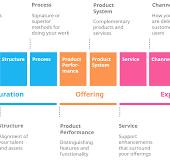
Doblin’s 10 Types of Innovation framework helps businesses look beyond products and consider these broader possibilities. Developed by the innovation consultancy Doblin, it groups ten types of innovation into three areas: Configuration, Offering and Experience.
Configuration: how an organisation works
Configuration innovations concern the inner workings of a business: how it creates value, organises its resources and collaborates with others.
Profit Model
A profit model is the way an organisation generates revenue and turns its activities into financial value. Innovation might involve changing what customers pay for, how they pay or when they pay. Examples include a subscription, a pay-as-you-go service or a product offered at a low price alongside paid upgrades.
Network
Network innovation involves working with other organisations to create or deliver value. Partners might contribute specialist knowledge, technology, distribution or access to new customers. A well-chosen partnership can help an organisation do more than it could achieve alone.
Structure
Structure refers to how a business arranges its people, assets and responsibilities. Changes to teams, roles, facilities or company culture can help an organisation work more effectively. For instance, bringing teams with different expertise together may make it easier to develop and deliver new services.
Process
Process innovation changes the methods used to carry out work. It may involve improving production, administration, delivery or quality control. Better processes can reduce waste, improve reliability or make it possible to offer something competitors find difficult to replicate.
Offering: what an organisation provides
Offering innovations focus on the products and services themselves, and on how those products and services work together.
Product Performance
Product performance is about the features, quality, functionality or design of a product. Improvements may make it faster, easier to use, more durable or better suited to a particular need. This is the type of innovation many people think of first, but it is only one part of the framework.
Product System
A product system is a group of related products and services that work together. An organisation might create a connected range, compatible accessories or digital tools that enhance the main product. The aim is to make the combined experience more useful than the individual elements would be on their own.
Experience: how customers encounter an organisation
Experience innovations shape the way customers discover, access, use and think about a business and its offerings.
Service
Service innovation improves the support and assistance that accompany an offering. This could include helpful advice before purchase, convenient delivery, responsive customer support or a straightforward returns process. Good service can make an otherwise ordinary product stand out.
Channel
Channel innovation changes how an organisation reaches customers and delivers its products or services. Channels may include shops, websites, apps, sales teams or third-party platforms. Coordinating these channels can make it easier for customers to move between them and complete a task.
Brand
Brand innovation concerns how an organisation communicates its identity and value. A clear, distinctive brand can help customers understand what an organisation stands for and why its offering may suit them. Brand innovation might involve a new way of expressing the organisation’s purpose, personality or benefits.
Customer Engagement
Customer engagement is about the interactions and relationships an organisation builds with its customers. This may include personalisation, communities, events, loyalty schemes or opportunities for customers to contribute ideas. The goal is to make the relationship meaningful, rather than treating each purchase as an isolated transaction.
Why use the framework?
The 10 Types of Innovation framework gives organisations a broader way to explore opportunities. It can help a team:
- look beyond product features and technology;
- identify opportunities in the business model or customer experience;
- compare an idea with the organisation’s existing strengths and practices; and
- combine different types of innovation into a more distinctive approach.
For example, an organisation launching a new service might rethink its pricing (Profit Model), work with a specialist partner (Network), make the service available through an app (Channel) and offer tailored support (Service and Customer Engagement). The innovation lies not necessarily in any one change, but in how the changes work together.
Putting the 10 types into practice
Start by describing the problem or opportunity the organisation wants to address. Then review each of the ten types and ask what could be changed. Which parts of the current offer are difficult for customers? Could a different partnership, process or pricing approach help? How might the experience be improved before, during and after use?
The framework is a prompt for exploration, not a checklist that every project must complete. Some ideas may focus on one type; others may combine several. The most useful innovations are those that solve a real problem, create value for customers and can be delivered effectively by the organisation.
Conclusion
Doblin’s 10 Types of Innovation shows that innovation is much broader than inventing a new product. It can involve the way a business is organised, the value it offers and the experiences it creates. By examining all ten types, organisations can uncover opportunities they might otherwise overlook and develop ideas that are both useful and difficult to imitate.
Nine Key Benefits of Doblin’s Ten Types of Innovation Framework
- Encourages a broader view of innovation.
- Looks beyond products and technology.
- Offers a clear, structured framework.
- Highlights business model opportunities.
- Includes customer experience and service.
- Helps teams spot overlooked opportunities.
- Supports more creative brainstorming.
- Shows how innovations can work together.
- Can be adapted to different organisations.
Five Limitations of Doblin’s Ten Types of Innovation Framework
- Can be difficult to apply without clear guidance.
- The ten categories may overlap.
- Does not guarantee an idea will succeed.
- Can be time-consuming to assess all ten types.
- May oversimplify complex innovation challenges.
Encourages a broader view of innovation.
One of the key benefits of Doblin’s 10 Types of Innovation is that it encourages organisations to look beyond new products and technology. By considering areas such as business models, partnerships, processes, customer service, branding and engagement, teams can spot opportunities to create value in unexpected ways. This broader perspective helps businesses develop more distinctive, joined-up innovations that improve not only what they offer, but also how they operate and connect with customers.
Looks beyond products and technology.
One of the key advantages of Doblin’s 10 Types of Innovation is that it looks beyond products and technology. It encourages organisations to explore other ways to create value, such as improving their business model, processes, partnerships, customer service or brand experience. This broader perspective can reveal opportunities that might be missed when innovation focuses only on developing new products or technical features.
Offers a clear, structured framework.
One of the key advantages of Doblin’s 10 Types of Innovation is that it offers a clear, structured framework for exploring new ideas. By grouping innovation into Configuration, Offering and Experience, it helps organisations look beyond product development and consider areas such as business models, processes, partnerships and customer engagement. This gives teams a shared language for discussing opportunities, spotting gaps and organising their thinking, while leaving room to adapt the framework to their own goals and circumstances.
Highlights business model opportunities.
One key advantage of Doblin’s 10 Types of Innovation is that it highlights opportunities to innovate in a business model, not just in a product or service. By considering areas such as profit models, partnerships, organisational structure and processes, businesses can explore new ways to create and capture value. This broader perspective may reveal opportunities to change how customers pay, reach new markets or deliver an offer more effectively—helping an organisation stand out and build a more sustainable advantage.
Includes customer experience and service.
A key advantage of Doblin’s 10 Types of Innovation is that it recognises customer experience and service as important sources of innovation, not just product features. By considering how customers discover, purchase and use an offering—and the support they receive along the way—organisations can find practical ways to make the whole experience more convenient, personal and valuable. This broader perspective can help businesses stand out and build stronger, longer-lasting relationships with customers.
Helps teams spot overlooked opportunities.
Doblin’s 10 Types of Innovation helps teams spot overlooked opportunities by encouraging them to look beyond product features and consider every part of the business. By exploring areas such as pricing, partnerships, processes, customer service and brand, teams can uncover practical ways to create value that may otherwise go unnoticed.
Supports more creative brainstorming.
Doblin’s 10 Types of Innovation supports more creative brainstorming by giving teams a broad set of prompts to explore, rather than limiting discussion to new products or features. Considering areas such as partnerships, pricing, processes, channels and customer engagement can reveal unexpected ways to solve a problem. This structured approach encourages people with different perspectives to contribute ideas and helps organisations spot opportunities they might otherwise overlook.
Shows how innovations can work together.
A key benefit of Doblin’s 10 Types of Innovation is that it shows how different innovations can reinforce one another. Rather than treating a new product, business model or customer service as a standalone improvement, the framework helps organisations combine changes across several areas to create greater value. For example, a new product could be supported by a subscription-based pricing model, a convenient digital channel and tailored customer support. Together, these elements can create a more distinctive and compelling experience than any one innovation could achieve alone.
Can be adapted to different organisations.
One of the key advantages of Doblin’s 10 Types of Innovation framework is that it can be adapted to organisations of different sizes, sectors and stages of development. A start-up might use it to explore new revenue models and customer channels, while an established charity, public service or business could focus on improving its processes, partnerships or service experience. The framework is flexible rather than prescriptive, allowing each organisation to select the innovation types most relevant to its goals, resources and customers.
Can be difficult to apply without clear guidance.
One drawback of Doblin’s 10 Types of Innovation is that the framework can be difficult to apply without clear guidance. The categories may overlap, and teams can be unsure where an idea fits or how to turn the framework into practical next steps. Without examples, facilitation or a clear process, organisations may find it hard to prioritise opportunities and use the framework consistently.
The ten categories may overlap.
One drawback of Doblin’s 10 Types of Innovation is that the categories can overlap, making it difficult to decide where a particular idea belongs. For example, a new digital service might involve changes to the product system, delivery channel and customer engagement at the same time. This can lead to inconsistent classifications or unnecessary debate, especially if teams treat the framework as a set of rigid boxes. It is more useful to see the categories as interconnected prompts for exploring innovation, rather than mutually exclusive labels.
Does not guarantee an idea will succeed.
One limitation of Doblin’s 10 Types of Innovation is that the framework cannot guarantee an idea will succeed. It helps organisations explore different ways to innovate, but it does not prove that customers will want an idea, that it can be delivered effectively or that it will be financially viable. Ideas still need to be tested, refined and assessed against real-world evidence before significant time and resources are committed.
Can be time-consuming to assess all ten types.
One drawback of Doblin’s 10 Types of Innovation framework is that assessing all ten areas can be time-consuming. Teams may need to gather information from across the organisation, consult customers and partners, and compare opportunities in detail. This can make the process feel overwhelming, particularly for smaller businesses with limited time and resources. To keep the exercise manageable, organisations can focus first on the types most relevant to their goals, then explore the others where useful.
May oversimplify complex innovation challenges.
One drawback of Doblin’s 10 Types of Innovation framework is that it can oversimplify complex innovation challenges. Real-world problems often involve several interconnected factors, changing market conditions and competing priorities, which cannot always be neatly categorised into ten types. As a result, teams may focus too heavily on fitting ideas into the framework rather than exploring the full context or underlying causes of a problem. It is best used as a starting point for discussion, alongside deeper research and critical judgement.