
The Brundtland Commission and the 1987 Report That Shaped Sustainable Development
The Brundtland Commission was the common name for the World Commission on Environment and Development (WCED), an independent body established by the United Nations in 1983. It was chaired by Gro Harlem Brundtland, then Prime Minister of Norway, and brought together members from countries around the world to examine the links between environmental protection and economic and social development.
In 1987, the Commission published its landmark report, Our Common Future. The report argued that environmental problems could not be separated from issues such as poverty, inequality, population growth and economic development. It called for a new approach that would meet people’s needs while protecting the natural systems on which future generations depend.
A lasting definition of sustainable development
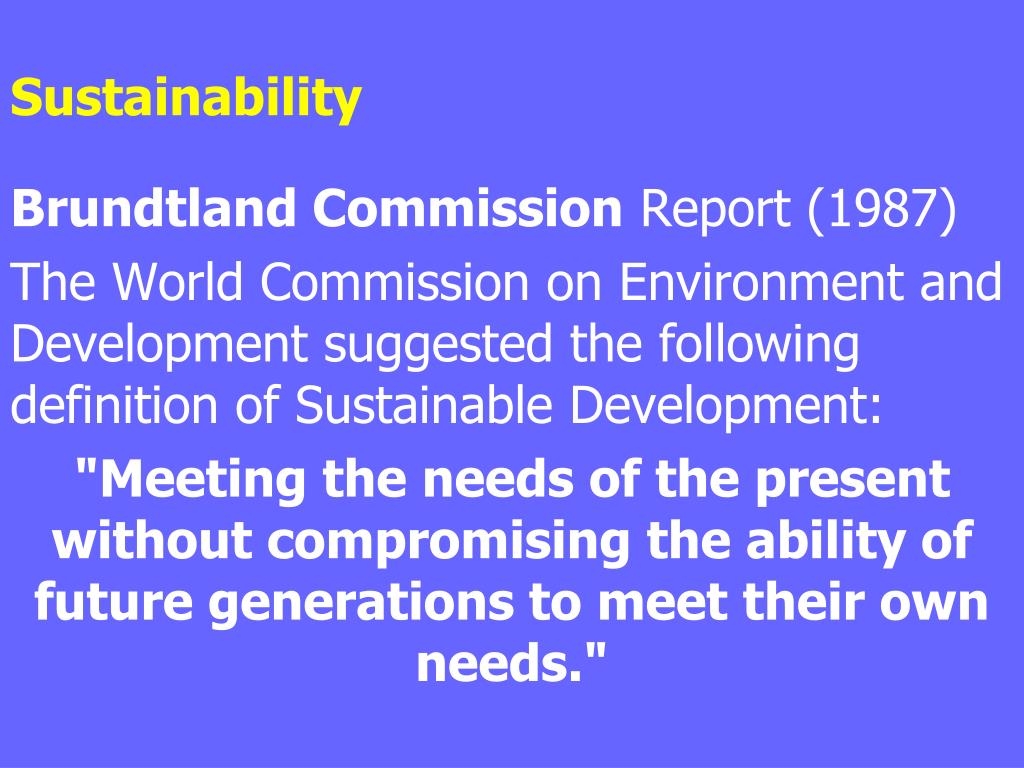
Our Common Future is best known for its definition of sustainable development: “development that meets the needs of the present without compromising the ability of future generations to meet their own needs”. This idea became a widely used foundation for international discussions about sustainability.
The definition emphasised two key ideas. First, meeting essential needs—particularly the needs of people living in poverty—should be a priority. Secondly, the limits of the environment and available technology must be considered when deciding how societies develop.
What did the Commission recommend?
The Commission called for environmental concerns to be included in economic decision-making, rather than treated as a separate issue. It encouraged governments to pursue development that could be sustained over time, improve international co-operation and make greater use of prevention and long-term planning.
The report also examined subjects including energy, industry, food security, urban growth and the management of shared natural resources. Its central message was that economic progress and environmental protection need not be opposing goals, but achieving both requires changes in policies and patterns of production and consumption.
Influence and legacy
Our Common Future helped place sustainable development firmly on the global political agenda. It influenced the discussions that led to the 1992 United Nations Conference on Environment and Development in Rio de Janeiro, often known as the Earth Summit. The concept has since featured in international agreements, government policies and the work of organisations around the world.
The Commission’s approach remains influential, although the meaning and practical application of sustainable development continue to be debated. Questions about how to balance economic growth, social well-being and environmental limits are still central to climate policy and development planning.
Why the Brundtland Commission still matters
The Brundtland Commission’s lasting contribution was to frame sustainability as a shared responsibility between generations and across countries. Its 1987 report made clear that decisions about development have long-term consequences—and that addressing environmental challenges is closely connected to building fairer, healthier societies.
The Brundtland Commission and Its 1987 Report: 9 Key Facts About Sustainable Development
- The Brundtland Commission was established by the UN in 1983.
- It was chaired by Norwegian politician Gro Harlem Brundtland.
- Its official name was the World Commission on Environment and Development.
- The commission published its report, *Our Common Future*, in 1987.
- The report helped popularise the term “sustainable development”.
- It defined sustainability around present and future generations’ needs.
- The report linked environmental protection with economic and social development.
- It called for international cooperation on global environmental challenges.
- Its ideas influenced the 1992 Rio Earth Summit.
The Brundtland Commission was established by the UN in 1983.
The Brundtland Commission was established by the United Nations in 1983 as the World Commission on Environment and Development. Chaired by Norwegian Prime Minister Gro Harlem Brundtland, it was tasked with examining how countries could pursue economic and social development while protecting the environment. Its work led to the influential 1987 report Our Common Future, which helped bring the idea of sustainable development to global attention.
It was chaired by Norwegian politician Gro Harlem Brundtland.
The Brundtland Commission was chaired by Norwegian politician Gro Harlem Brundtland, who brought political experience and a strong interest in public health and sustainable development to the role. Under her leadership, the Commission examined how environmental protection could be reconciled with economic and social progress. Its 1987 report, Our Common Future, helped popularise the idea of sustainable development and placed it at the centre of international debate.
Its official name was the World Commission on Environment and Development.
The Brundtland Commission’s official name was the World Commission on Environment and Development (WCED). Established by the United Nations in 1983, it became widely known by the name of its chair, Gro Harlem Brundtland, and is particularly associated with its influential 1987 report, Our Common Future.
The commission published its report, *Our Common Future*, in 1987.
The commission published its landmark report, Our Common Future, in 1987. It brought environmental protection and economic and social development together, arguing that they must be considered as interconnected challenges. The report is best known for defining sustainable development as meeting the needs of the present without compromising the ability of future generations to meet their own needs.
The report helped popularise the term “sustainable development”.
The Brundtland Commission’s 1987 report, Our Common Future, helped popularise the term “sustainable development” and bring it into international debate. By defining it as development that meets present needs without compromising the ability of future generations to meet their own, the report offered a clear way to connect economic progress, social well-being and environmental protection. This definition has since shaped policies and discussions around the world.
It defined sustainability around present and future generations’ needs.
The Brundtland Commission’s 1987 report, Our Common Future, defined sustainable development as meeting the needs of the present without compromising future generations’ ability to meet their own needs. This principle highlights the importance of using resources responsibly today, while protecting the environment and ensuring that people in the future can enjoy the same opportunities and quality of life.
The report linked environmental protection with economic and social development.
The Brundtland Commission’s 1987 report, Our Common Future, argued that environmental protection cannot be separated from economic and social development. It highlighted how poverty, inequality and unsustainable economic activity can contribute to environmental harm, and called for development that improves people’s lives while safeguarding natural resources for future generations.
It called for international cooperation on global environmental challenges.
The Brundtland Commission’s 1987 report, Our Common Future, stressed that environmental challenges such as pollution, climate change and the loss of natural resources cross national borders and cannot be solved by individual countries acting alone. It called for stronger international co-operation, shared responsibility and coordinated policies to protect the environment while supporting sustainable development for present and future generations.
Its ideas influenced the 1992 Rio Earth Summit.
The Brundtland Commission’s 1987 report, Our Common Future, helped shape the agenda for the 1992 Rio Earth Summit by bringing sustainable development to the forefront of international debate. Its emphasis on linking environmental protection with social and economic progress informed discussions at the summit and helped establish sustainability as a shared global priority.